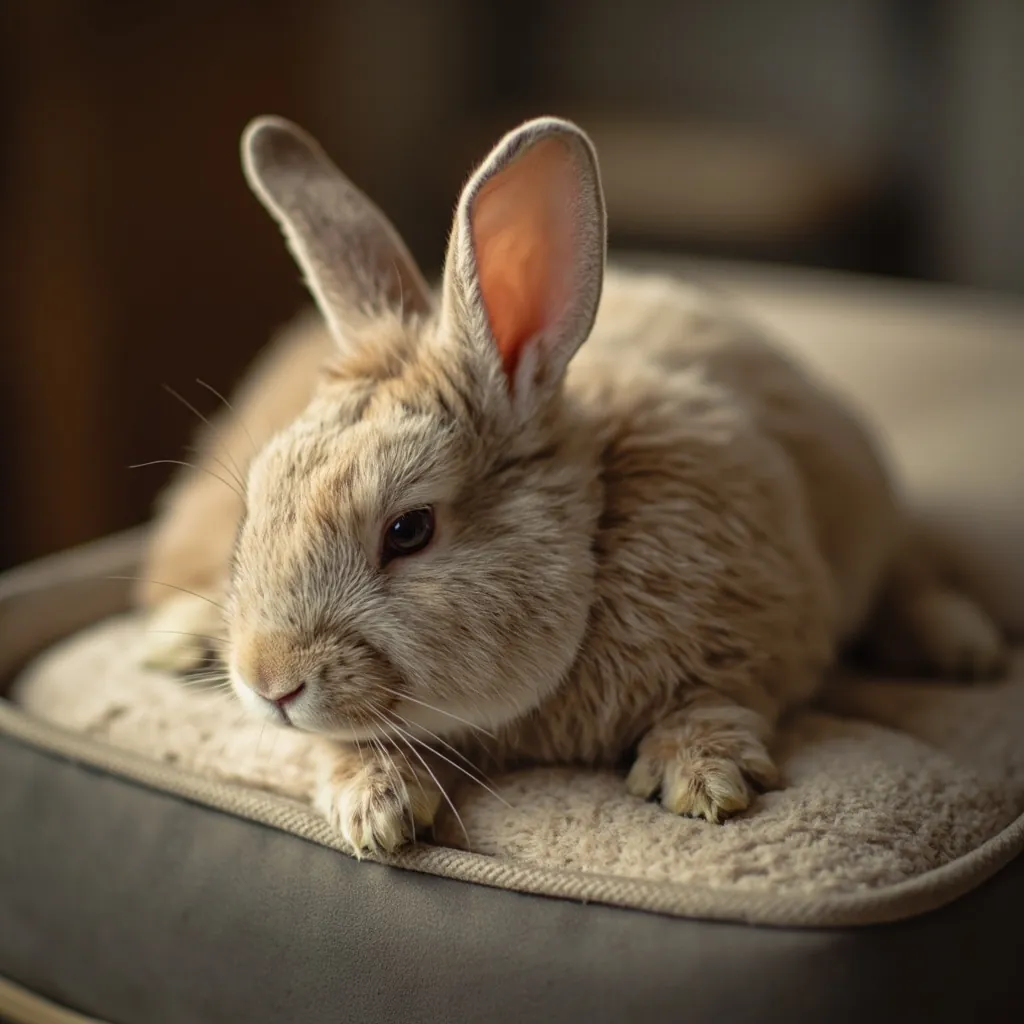
Quality of life is not a blood test. It cannot be measured in numbers on a chart. It is a question you ask yourself honestly: is my rabbit still having more good days than bad ones? Is there joy in their life, even if that life looks different than it did a year ago?
This is one of the hardest questions to sit with. But asking it clearly, without flinching, is one of the kindest things you can do for a rabbit you love. This article will not tell you when to make a decision. It will help you see more clearly so that when the time comes, you see it honestly.
⚠️ Medical information: This article is for general educational purposes and is not a substitute for professional veterinary care. Always consult a rabbit-savvy veterinarian for health concerns. See our full disclaimer.
The 5 Domains of Rabbit Quality of Life
Veterinarians who specialize in palliative care often use a framework organized around five domains. Think of these as five buckets — if most of them are still being filled, your rabbit is probably doing okay.
1. Eating and Nutrition
Rabbits are grazing animals. They are designed to eat constantly, and their relationship with food is a strong indicator of overall wellbeing. A rabbit who eats enthusiastically — especially for greens and hay — is a rabbit whose body is still functioning. Watch for appetite changes, not just whether they eat, but whether they eat with interest.
2. Mobility
Mobility matters to rabbits. They are prey animals whose survival depends on the ability to move. Even if your rabbit has arthritis, they should still be able to move around their space, shift positions comfortably, and access their food, water, and litter box without distress. Immobility that lasts is a quality of life concern.
3. Social Engagement
Rabbits are social. Most rabbits want interaction — whether that is gentle petting, sitting near you, or just knowing you are in the room. A rabbit who withdraws completely, who no longer shows interest in you or in other rabbits in the household, may be signaling something important. Social withdrawal is not always about personality. It can be pain or illness expressing itself as disinterest.
4. Mental Stimulation
Even senior rabbits benefit from curiosity. A rabbit who sniffs new smells, investigates a rearranged space, or shows interest in a new toy is still engaged with the world. This does not mean they need constant entertainment. But a rabbit who has lost all curiosity — who sits in one position, uninterested in anything — is telling you something.
5. Pain Management
This is the one that requires the most honest observation, because rabbits are masters at hiding pain. A rabbit can have significant pain and still eat, still move, still appear normal to someone who does not know what to look for. The question here is not just whether pain exists, but whether it is being adequately managed. Work with your vet to assess pain regularly and adjust your approach as needed.
The Good Day / Bad Day Tracker
Keeping a simple log takes the guesswork out of quality of life assessments. When you are in the middle of daily care, it is easy to forget what last week looked like. A log forces you to compare.
Once a week, rate each day as a good day, a mixed day, or a bad day. A good day means your rabbit showed interest in food, moved comfortably around their space, engaged socially at their normal level, and seemed content. A bad day means the opposite — no appetite, visible distress, withdrawal. Mixed days are exactly what they sound like.
Over a month, add up the days. If good days are outnumbering bad days, your rabbit is still finding joy. If bad days are stacking up, or if mixed days are becoming bad days, the trend is worth discussing with your vet or someone you trust.
This tracker is not about judgment. It is about seeing patterns you might miss in the daily blur. Patterns are easier to face than snapshots.
Specific Signs by Condition
Arthritis
Arthritis is common in senior rabbits and highly manageable in most cases. A rabbit with well-managed arthritis can still have excellent quality of life.
A good day for a rabbit with arthritis might look like this: they move a little more slowly than they used to, they rest in one spot for longer, but they still hop to their food bowl eagerly, they still greet you at the edge of the pen, they still stretch out comfortably when lying down. They might not jump onto the couch anymore, but they are not in visible distress.
A bad day looks different. The rabbit stays in one position for hours. They do not come to the food bowl — you have to bring it to them. They sit hunched and still in a corner. They flinch or pull away when you touch their back or hips. They have stopped grooming and their coat looks dull and matted. These are signs that pain has outpaced your current management plan.
If you are seeing more bad days than good, it is time to call your vet. Pain management for arthritis is not one-size-fits-all — what works one week may need adjustment the next. Our arthritis guide covers medications, supplements, and home modifications in detail.
Vision Loss
Rabbits adapt remarkably well to vision loss, especially gradual vision loss from conditions like cataracts. The key word is adapt — if their environment stays consistent, a visually impaired rabbit can live a full and comfortable life.
Quality of life stays high when you: keep furniture and resources in the same spots, introduce new objects gradually, use texture cues to mark different areas (a rug by the litter box, a different flooring near the food), and avoid startling them by announcing yourself before you approach.
A rabbit who has adapted to vision loss will still eat well, move confidently around their space, seek out your attention, and engage with their environment in their own way. A rabbit who is constantly bumping into things, falling, or seeming confused and afraid even in a familiar space may be struggling in a way that environmental adjustments alone cannot fix.
Post-Surgical Recovery
After surgery, rabbits usually have some rough days followed by steady improvement. The question is whether they are trending toward better or staying stuck.
Normal post-surgical recovery involves a bad day or two — reduced appetite, quiet behavior, some discomfort. But you should see measurable improvement within 48 to 72 hours. By day three or four, most rabbits are eating again, moving tentatively, and showing interest in their surroundings.
Red flags during recovery: no appetite after 48 hours, continued pain signs despite pain medication, worsening mobility instead of gradual improvement, hiding and withdrawing with no signs of engagement. These are not the normal course of recovery — they are reasons to call your vet immediately. Post-surgical suffering that extends beyond what the expected timeline would suggest is a sign that something has gone wrong.
The Hindsight Test
Here is a question people often wish they had asked themselves earlier: will I regret waiting too long? Not did I wait too long — will I regret it?
Most people who have had to make a end-of-life decision for a beloved pet do not look back and wish they had waited longer. They look back and wish they had let go a little sooner. They wish they had spared their rabbit those final days of suffering, and they carry that guilt even when they know, intellectually, that they made the right call.
The hindsight test is not a reason to rush. It is a reason to be honest with yourself about what you are really waiting for. Are you waiting because your rabbit is still having good days? Or are you waiting because you are not ready?
Both answers are human. Neither one is wrong. But they are different answers, and they lead to different choices. Naming the difference matters.
Working With Your Vet on Palliative Care vs. Euthanasia
Palliative care and euthanasia are not opposites — they are part of the same conversation. Palliative care means making your rabbit comfortable when a condition can no longer be cured. Euthanasia is the decision to end suffering when comfort can no longer be maintained.
A good vet will talk with you about both without pushing you in either direction. They can help you assess pain, track quality of life over time, and understand when medical management is no longer keeping your rabbit comfortable. They cannot make the final decision for you, but they can give you honest information to base it on.
Questions worth asking your vet: What does a bad day look like for a rabbit with this condition? At what point would you recommend considering euthanasia? What signs should I watch for at home that would indicate pain has become unmanageable? Is there anything we have not tried yet that might buy more good days?
Do not be afraid to ask these questions early. Having the conversation before you are in crisis means you can think clearly instead of making a rushed decision in an emergency.
What a Good Death Can Look Like
Euthanasia at home is an option that many rabbit owners find more peaceful than a clinic visit. A rabbit who is stressed by car rides and clinical environments may be far more comfortable in their own space. Many mobile vets who specialize in small pets offer this service.
The procedure itself is gentle. A vet gives a sedative first, so the rabbit drifts into deep sleep before the final medication. The rabbit feels no pain and no fear. They are held in a familiar position, in a familiar place, by someone they trust. It is quiet. It is calm. It is the opposite of the emergency decision made in a bright, noisy clinic after hours of crisis.
If you choose at-home euthanasia, you can control the environment. Dim the lights. Play quiet music or silence. Let other rabbits in the household be present if they want to be — rabbits often seek to be near their companions at the end. This is not something to force, but it is something some rabbits and families find meaningful.
Afterward, you can take time. You do not have to rush. You can sit with your rabbit for as long as you need to.
Resources
- House Rabbit Society — hrrg.org — has detailed quality of life resources, pet loss support, and a searchable directory of rabbit-savvy vets.
- Local rabbit rescues — Most rescues offer grief support and can connect you with people who have been through similar decisions. Search for rabbit rescues in your area and ask about their pet loss services.
- Pet loss support hotlines — Many veterinary schools and pet insurance providers offer free hotlines staffed by counselors trained in grief support for pet loss.
- Your veterinarian — Ask them about palliative care options, at-home euthanasia, and any grief support resources they offer.
Related Articles
- Senior Rabbit Care — Everything you need to know about caring for your rabbit through their golden years.
- Grieving a Rabbit — What to expect after you lose a rabbit, how to talk to kids about pet death, and how to honor the rabbit who meant everything to you.
Quality of life is not about perfection. It is about honest observation, consistent care, and the courage to look at what you see without flinching. Your rabbit trusts you to speak for them when they cannot speak for themselves. That is what this is about.
