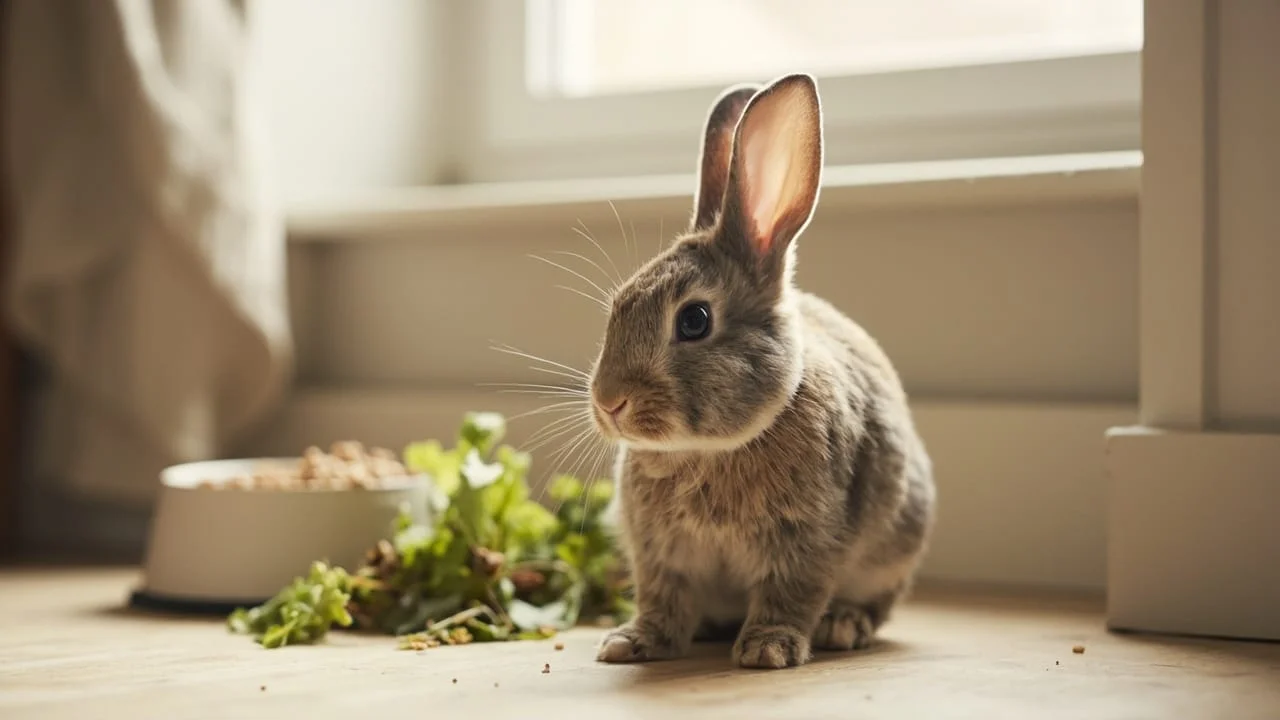
If your rabbit has not eaten in 12 hours, you are past the warning stage. Act now.
Rabbits are prey animals. In the wild, a rabbit that shows weakness invites predators. That instinct is still deeply embedded in every domestic rabbit, no matter how safe they are in your home. It means rabbits have evolved to hide illness and loss of appetite until the problem is advanced. By the time your rabbit visibly refuses food, things have usually been building for hours or even a day or two.
This is one of the most important things to understand as a rabbit owner: a rabbit not eating is always an emergency. Not sometimes. Not "maybe." Always. This guide covers why rabbits stop eating, exactly what to do when it happens, home remedies that can help in the first hour, and how to prevent it from happening again.
Why Not Eating Is an Emergency in Rabbits
Most animals — dogs, cats, even humans — can skip a meal and be fine. A rabbit cannot. A rabbit's digestive system is a continuous processor that depends on constant input to function. Food moves through the gut because more food pushes it through. When a rabbit stops eating, gut motility slows within hours. Slow motility allows gas to build up, harmful bacteria to multiply, and the gut contents to harden. This is the beginning of GI stasis, and it can kill a rabbit in 24 to 48 hours.
The other reason a rabbit not eating is so serious is dental health. Rabbits' teeth grow continuously, about 2 to 3 millimeters per week. Without constant chewing to wear them down, teeth develop sharp points and overgrow. Pain from dental problems causes rabbits to stop eating, which worsens the teeth further, in a downward spiral. A rabbit that stops eating because of tooth pain will not recover appetite until the teeth are addressed — and that requires a veterinarian.
Common Causes: Why Rabbits Stop Eating
Dental Problems
Sharp tooth points, overgrown molars, infected tooth roots, or broken teeth make chewing painful. Rabbits may still want food — they approach the food bowl, sniff it, even pick it up — but then drop it or refuse to chew. Watch for this pattern: interest without eating is just as concerning as complete refusal.
GI Stasis
Gastrointestinal stasis is the condition where the gut simply slows down or stops. It is often secondary to another problem — the rabbit stops eating because something hurts, and then the gut stops moving because no food is coming in. But it can also be primary, triggered by stress, dehydration, or a diet too low in fiber. Once the gut stops, the cycle feeds itself: the rabbit does not eat because the gut is slow, and the gut gets slower because the rabbit is not eating.
Pain from Other Conditions
A rabbit in pain anywhere in the body will stop eating. This includes ear infections (which affect balance and cause head tilt), urinary tract infections, bladder stones, respiratory infections, and arthritis. The pain is a distraction — the rabbit's entire focus is on the discomfort, not on food.
Stress
Rabbits are stress-sensitive creatures. A sudden change in environment — a new pet, a moved furniture, a loud construction noise outside, a trip to the vet — can cause enough stress to suppress appetite. Rabbits also stress if they feel unsafe. A dominant rabbit in the house, an Predator nearby (even a cat or dog in another room), or an uncomfortable living space can keep a rabbit from eating.
Food Aversion
Some rabbits develop strong preferences for certain foods and refuse anything new or unfamiliar. If you have been feeding a very limited diet — only pellets, for example — a rabbit suddenly presented with unfamiliar greens may turn away from all food. This is different from a health-related appetite loss, but it still needs to be addressed. A rabbit surviving on pellets alone is at risk for multiple health problems.
Digestive Blockages
Hairballs, ingested fur from grooming, or a piece of bedding or carpet can create a partial blockage that makes eating feel impossible. Rabbits cannot vomit, so they cannot clear a blockage on their own. A rabbit that eats a little, then sits hunched, then eats a little more, may be dealing with a partial blockage.
Hot Weather
Rabbits are highly sensitive to heat. Above 80 degrees Fahrenheit, rabbits can overheat quickly. Hot rabbits often stop eating and drinking, become lethargic, and flatten themselves against cool surfaces. Heat stroke is a genuine emergency — rabbits cannot pant or sweat effectively.
Step by Step: What to Do When Your Rabbit Stops Eating
Step 1: Act Immediately — Do Not Wait
The moment you notice your rabbit has not touched food for more than 4 to 6 hours, treat it as an emergency. Call your rabbit-savvy vet now, even if it is after hours. Many exotic animal hospitals have on-call emergency services. Find that number before you need it. Put it in your phone right now.
Step 2: Assess the Situation Quickly
While getting on the phone, do a quick check:
- Is your rabbit alert, hunched, or lying flat? Hunched and flat are both concerning but mean different things.
- Are there any droppings in the cage? Fewer droppings or smaller than normal droppings are a bad sign. No droppings at all for 12 hours is an extreme emergency.
- Does the belly feel hard or tight, or does it feel normal? A hard, bloated belly needs immediate vet attention.
- Are there any obvious signs of injury or drooling?
- Is there fresh water available?
Step 3: Offer Favorite Foods
Before heading to the vet (or while waiting for a call back), offer your rabbit's most tempting foods. Fresh herbs like cilantro, basil, or parsley oftenstimulate appetite. A small piece of banana or strawberry can sometimes get a rabbit to eat. The goal is to get something in the gut, anything, to keep things moving.
If your rabbit refuses even treats, try this: soak a piece of hay in warm water and offer it. The warmth can smell appealing, and the moisture softens it enough to chew if the rabbit is willing. You can also try offering wet greens — cucumber or celery — which are easier to chew than hay when a rabbit is in pain.
Step 4: Try Critical Care Feeding
If you have Critical Care powder (a recovery feeding formula for herbivores available from your vet or pet supply stores), mix it according to package directions with water to make a paste. Load it into a syringe (no needle) and offer small amounts — about 1 to 2 milliliters at a time, letting the rabbit swallow between each. Do not force it down the throat — that risks aspiration. Place the syringe in the gap behind the front teeth and let the rabbit lick it off.
If you do not have Critical Care, you can make a temporary substitute by blending a small amount of timothy hay with water into a thin slurry, or using unsweetened pumpkin puree (not pie filling). These are short-term measures to get something in the gut while you arrange veterinary care.
Step 5: Get to the Vet
When you call the vet, describe exactly what you see: "My rabbit has not eaten in X hours, is producing [normal/few/no] droppings, and appears [hunched/flat/lethargic/alert]." This gives the vet real information to triage your case. If they say come in, go. Now. Not after you finish dinner, not after bedtime. Now.
Bring a fresh stool sample if possible. Bring a list of everything your rabbit has eaten in the last 48 hours. Bring any medications your rabbit is on. The more information you can give, the faster the vet can find the problem.
Home Remedies That Can Help
Simethicone for Gas Pain
If your rabbit's belly feels tight or distended and they are grinding their teeth (a sign of pain), infant simethicone drops can help break up gas bubbles. The dose is 20 to 30 milligrams (about 0.3 to 0.5 milliliters of infant simethicone) given orally every 6 hours. You can use a clean syringe to administer it. This is not a substitute for veterinary care, but it can provide relief during the time it takes to get to the vet or while waiting for a call back.
Warmth
A rabbit in GI stasis often feels cold because gut motility generates body heat. If your rabbit is cold to the touch, gently warm them with a heating pad set on low, placed under a towel — never directly on the rabbit's skin. You can also fill a sock with uncooked rice, microwave it for 30 seconds, and place it near (not directly on) your rabbit. Warmth can sometimes encourage a rabbit to relax enough to eat.
Fresh Herbs
Strong-smelling fresh herbs can sometimes kickstart a rabbit's appetite when nothing else works. Cilantro, basil, mint, and dill are all safe for rabbits and have strong aromatic properties. Offer a small handful of mixed herbs, either loose or in a shallow dish. If the rabbit sniffs and shows interest, that is a good sign.
Gentle Belly Massage
Very gentle circular massage on the belly can help move gas along. Place your rabbit on a non-slip surface on their back (only if they are calm and relaxed — never force this) and use your fingertips in slow, clockwise circles on the belly. Stop immediately if your rabbit tenses or struggles. This is not a substitute for medical care, but some rabbits pass gas during or after a gentle massage, which is a positive sign that gut motility is still possible.
Mobility and Positioning
If your rabbit is trying to eat but seems unable to position themselves comfortably, check their litter box and bedding. A rabbit with a urinary tract infection or arthritis may want to eat but cannot get into a comfortable position. Temporarily lowering the sides of the enclosure or providing a flatter resting area can help.
Prevention: How to Keep Your Rabbit Eating
Unlimited Hay at All Times
This cannot be said enough. Hay must be available 24 hours a day, 7 days a week. The constant fiber is what keeps the digestive system functioning and what keeps the teeth worn down. If your rabbit goes through hay quickly, that is actually a good sign — it means they are eating. Check hay supplies daily and refill before the bowl is empty.
Monitor Daily Intake
Make it a habit to note your rabbit's eating habits every single day. This takes 10 seconds: look in the food bowl and note how much hay was eaten, whether pellets were consumed, and check the litter box for droppings. Normal droppings are round, dry, and consistent in size. Any change in the number, size, or shape of droppings is a reason to pay closer attention. Keep a simple log — a notes app on your phone is fine — and if you see a downward trend over 24 to 48 hours, call your vet.
Regular Dental Checks
Ask your rabbit-savvy vet to check your rabbit's teeth at every annual exam. They will use a special scope to look at the molars and check for sharp points (spurs). Some rabbits need dental filing once or twice a year. If your rabbit has ever had dental work, they are at higher risk for recurrence and need monitoring.
Consistent Routine
Rabbits thrive on predictability. Feed at roughly the same times each day. Keep the cage layout stable. Avoid sudden diet changes — introduce new vegetables one at a time, waiting 24 hours between each. If you need to change pellet brands, mix the new with the old over 7 to 10 days, gradually increasing the new and decreasing the old. Any sudden change can stress a rabbit enough to suppress appetite.
Safe Environment
Make sure your rabbit feels secure in their space. Provide hidey houses where they can retreat and feel safe. If you have other pets, ensure the rabbit has a space the other animals cannot access. Reduce loud noises and sudden changes in the household. A calm, predictable environment supports a healthy appetite.
Water Access
Dehydration slows gut motility. Always ensure fresh water is available. Many rabbits prefer drinking from a heavy ceramic bowl rather than a bottle — they can get more water faster that way. Change water daily and scrub the bowl weekly to prevent algae and bacteria.
Conclusion
When a rabbit stops eating, every hour matters. The gut must keep moving, and the only way to make that happen is to get food in — and if the rabbit will not eat on their own, to feed them by hand while arranging veterinary care. Understanding why this happens, acting immediately, and maintaining prevention habits are the three things that stand between most rabbit owners and the worst outcomes.
Trust your instincts. If something feels wrong — if your rabbit is sitting differently, eating less, or producing fewer droppings — act on that feeling. It is always better to make a vet call that turns out to be nothing than to wait through a medical emergency that could have been prevented.
Ready to Dive Deeper?
Print our free Rabbit Emergency Kit Checklist to have everything you need on hand before a crisis happens.
