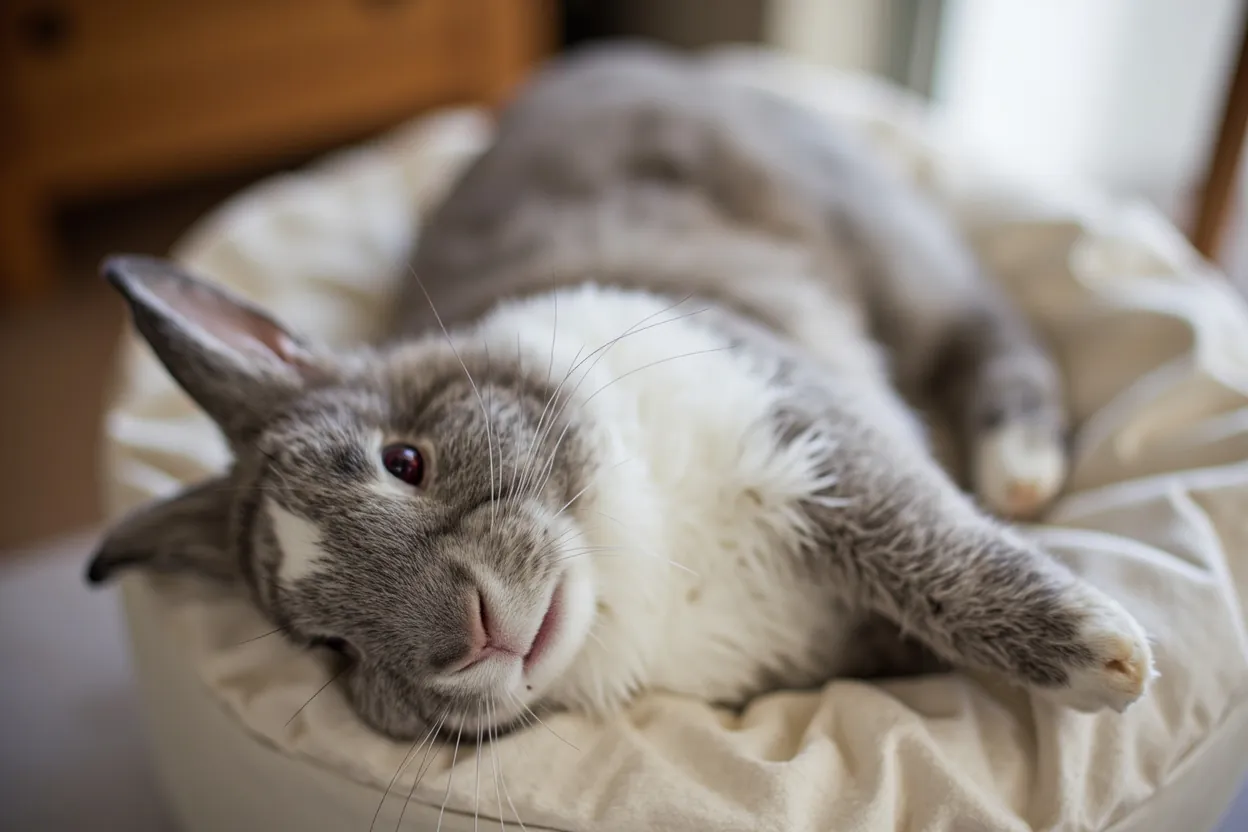
Arthritis is one of the most common health conditions affecting senior rabbits. Studies suggest up to 75% of rabbits over age 5 show signs of arthritis to some degree. Yet it remains one of the most underdiagnosed conditions in rabbits — because rabbits are experts at hiding pain.
Arthritis is inflammation in the joints that causes pain, stiffness, and reduced mobility. In rabbits it typically affects the hips, spine, and knees. It is progressive, meaning it gets worse over time.
Unlike humans or dogs who might limp obviously or vocalize pain, rabbits hide discomfort instinctively. A rabbit in significant pain will often simply sit quietly, eat less, and move less. This makes arthritis easy to miss until it is quite advanced.
The good news: with early recognition, home modifications, and proper veterinary care, you can significantly slow arthritis progression and keep your senior rabbit comfortable for years.
⚠️ Medical information: This article is for general educational purposes and is not a substitute for professional veterinary care. Always consult a rabbit-savvy veterinarian for health concerns. See our full disclaimer.
Signs of Arthritis in Rabbits
Arthritis is subtle. Watch for these early indicators:
📎 Download our Senior Rabbit Care Checklist to track symptoms at home.
Mobility Changes
- Reluctance to move or difficulty getting up from rest
- Hesitancy to jump up or down from favorite spots (couch, bed, litter box)
- Moving more slowly than usual, especially after rest
- Reduced hopping — taking more single hops instead of bounding
- Sitting in one spot for long periods instead of exploring
Sitting Posture
- Feet splayed out flat instead of tucked neatly underneath — this is often the first noticeable sign
- Sitting in a hunched, balled-up position more often
- Favoring one side when sitting
Grooming Changes
- Not grooming as thoroughly — back and hindquarters are harder to reach
- Matting on the lower back or hind legs
- Fur looking unkempt when it used to be smooth
- Overgrown nails — rabbits in pain move less and wear their nails down less
Behavioral Changes
- Aggression when touched near joints (they are protecting a painful area)
- Less interest in playing or interacting
- Taking longer to come out of their hidey house in the morning
- Resisting being picked up
Litter Box Issues
- Missing the litter box more often
- Standing in the litter box rather than sitting
- Difficulty posturing to urinate or defecate
- Increased accidents outside the box
Important: A rabbit sitting with feet stretched out flat instead of tucked under is a classic sign of mobility discomfort. This is often the first observable sign owners notice. Do not dismiss it as "just old rabbit behavior."
How Arthritis Is Diagnosed
If you suspect arthritis, do not wait — rabbits hide pain so well that by the time you notice obvious symptoms, they may be in significant discomfort.
Veterinary Examination
A rabbit-savvy vet will:
- Physically examine joint mobility and range of motion
- Palpate joints for swelling, heat, or pain responses
- Observe gait and movement patterns
- Ask about behavior changes at home
Diagnostic Imaging
- X-rays are the primary tool for confirming arthritis. They show joint space narrowing, bone spurs, and degenerative changes in hips, spine, and knees.
- Blood work may be recommended to rule out other conditions that can mimic arthritis symptoms (such as E. cuniculi or kidney disease)
When to See the Vet
If you notice any of the signs above lasting more than a few days, book an appointment. You do not need to wait for obvious limping — subtle changes in behavior, posture, and grooming are enough reason to get a checkup.
Treatment Options
Veterinary Treatments
Pain Management:
- Meloxicam (Metacam) — the most commonly prescribed rabbit-safe anti-inflammatory and pain medication. Never give human NSAIDs like ibuprofen — they can be fatal to rabbits.
- Gabapentin — sometimes used for chronic arthritis pain in rabbits
- Buprenorphine — for acute pain episodes
Critical: Never give your rabbit any medication without explicit veterinary direction. Dosage for rabbits is weight-specific and different from dogs or cats. Human medications and even some vet medications designed for other species can kill rabbits.
Joint Supplements:
- Glucosamine and chondroitin — may help support cartilage health. Discuss with your vet for proper dosing.
- Omega-3 fatty acids — anti-inflammatory properties; can be added to diet in appropriate amounts
- Green-lipped mussel — some rabbit owners and vets report benefits for joint stiffness
Alternative Therapies:
- Veterinary acupuncture — many rabbits respond well. Look for a veterinarian certified in veterinary acupuncture (cVA or similar credentials).
- Laser therapy — available at some specialty exotic animal clinics; reduces inflammation in joints
- Chiropractic care — some rabbit-savvy integrative vets offer this; use cautiously and only with an experienced practitioner
Home Modifications
These changes can dramatically improve quality of life for arthritic rabbits:
Litter Box Adjustments:
- Use a lower-sided litter box or a casserole dish — easier to step over
- Add a ramp or low step to help them get in and out
- Consider placing a non-slip mat in front of the box
- Keep the box very clean — arthritic rabbits may avoid a box that requires difficult posturing
Flooring:
- Cover slippery floors with yoga mats, fleece blankets, or rugs — arthritic rabbits lose confidence on slick surfaces
- Give them consistent grip throughout their area
- Remove obstacles that require jumping or climbing
Resting Areas:
- Provide extra padding — orthopedic pet beds, memory foam, or folded towels
- Heated pad under their favorite resting spot — warmth soothes stiff joints
- Lower beds so they do not have far to fall when they lie down
Accessibility:
- Move food and water to accessible heights — senior rabbits should not have to stretch or climb
- Provide ramps instead of steps to favorite spots (couch, bed, window perch)
- Consider a one-level living space if possible — avoid multi-level setups that require climbing
- Use low-sided hidey houses instead of enclosed tunnel-style houses
Exercise:
- Keep them moving — gentle, regular exercise maintains joint flexibility
- Offer shallow dishes for water — deeper dishes can be difficult to drink from if neck mobility is limited
- Supervised, calm exploration time in a safe space
Dietary Support for Arthritic Rabbits
Maintaining Healthy Weight
This is one of the most important things you can do for an arthritic rabbit. Extra pounds stress joints significantly.
- Monitor weight weekly with a kitchen scale
- Adjust pellet portions if needed (but do not remove pellets entirely without vet guidance)
- Continue unlimited hay — this should never be reduced
Anti-Inflammatory Foods (In Appropriate Amounts)
Some vegetables have natural anti-inflammatory properties:
- Parsley — small amounts daily (high in calcium, so limit in some situations)
- Celery — natural anti-inflammatory compounds
- Turmeric — a pinch added to food may help (discuss with your vet for proper dosing — too much can cause digestive upset)
- Ginger — very small amounts only; can upset sensitive rabbit stomachs
Important: Always introduce new foods slowly and in small quantities. Rabbits have sensitive digestive systems and sudden dietary changes can cause GI stasis, which is life-threatening.
Quality of Life Assessment
As arthritis progresses, regularly assess your rabbit's quality of life. Answer these questions honestly:
- Is my rabbit still interested in food and eating?
- Can my rabbit move around enough to do basic things (eat, drink, access litter box, reach their favorite resting spot)?
- Is my rabbit still interested in their surroundings, their people, and their favorite things?
- Is my rabbit in pain that cannot be adequately managed?
- Are the good days outweighing the bad days?
Making Difficult Decisions
Quality of life discussions are personal. Work with your veterinarian to understand:
- What treatments or adjustments might help
- What the expected progression looks like
- When palliative care becomes more appropriate than aggressive treatment
You do not have to wait until your rabbit is at death's door. Choosing comfort over longevity before suffering becomes significant is a valid, loving decision.
Preventing Arthritis Progression
You cannot fully prevent arthritis, but you can reduce severity and slow progression:
- Keep rabbits at a healthy weight throughout their lives — this is the single biggest factor
- Provide regular exercise throughout life — mobility maintains joint health
- Feed a proper diet with continuous hay to support overall bone and joint health
- Spay or neuter — hormones affect joint health indirectly through behavior and activity levels
- Regular vet checkups — catch arthritis early before it becomes severe
Products That Help Arthritic Rabbits
We recommend these items based on real experience:
- Low-sided litter boxes — Makes getting in and out easier on stiff joints
- Orthopedic memory foam beds — Provides cushioning for achy joints
- Ramps with non-slip surfaces — Easier than steps for rabbits who struggle to jump
- Heated pads (non-electric) — Warmness soothes joint stiffness; use only under supervision
- Yoga mats and fleece — Makes flooring easier to walk on
- Heavy ceramic water bowls — Easier to drink from than bottles for rabbits with neck stiffness
[See our full list of senior rabbit care products ->](/products/senior-rabbit-care)
When to Consider Euthanasia
This is the hardest part of rabbit ownership. But being honest about quality of life is part of being a good caretaker.
Signs that quality of life has deteriorated significantly:
- Cannot eat even with assistance
- Cannot move around without significant pain
- No response to treatment after appropriate trials
- No interest in food, people, or their surroundings
- More bad days than good days
Euthanasia is a gift you can give when suffering becomes greater than quality of life. It is the final act of love and care. Many rabbit-savvy veterinarians offer at-home euthanasia so your rabbit can pass in a comfortable, familiar space.
Support: The House Rabbit Society has pet loss support resources at rabbit.org. If you are struggling with end-of-life decisions, reach out — you do not have to navigate this alone.
Final Note
Arthritis does not mean the end of a good life for your rabbit. With attention, accommodation, and love, many arthritic rabbits continue to enjoy their days, binky occasionally, and bond with their people for months and years after diagnosis.
The key is noticing early, working with a rabbit-savvy vet, and making the small changes that keep your rabbit comfortable. Your rabbit trusts you to advocate for them. This guide gives you the tools to do exactly that.
Keep Learning: Download our Senior Rabbit Care Checklist for a printable guide to managing arthritis at home.
Have questions about senior rabbit care? Contact us or visit our resources page for more guides.
Ready to Dive Deeper?
Get our free Senior Rabbit Care Checklist — a printable guide to monitoring your arthritic rabbit at home.
